 Energy Heritage
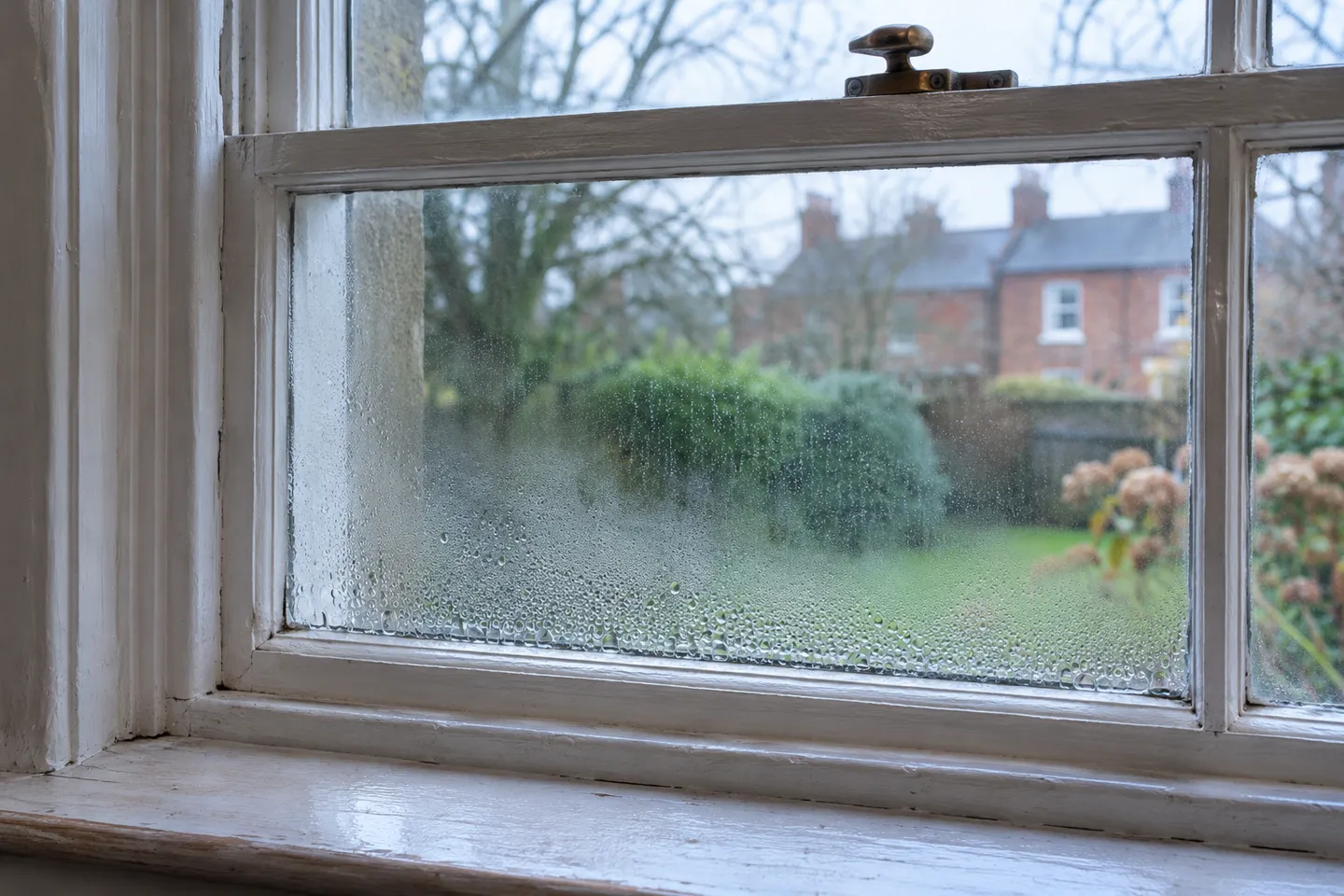
Describe the observation before naming the cause
Write “water droplets on the lower bedroom pane each morning” or “brown patch beneath the upstairs window after rain”. These descriptions are more useful than immediately labelling everything rising damp. Historic England’s moisture-investigation guidance identifies several possible sources, including occupants’ activities, building defects and leaking services. The cause needs to be established before treatment is chosen.
Photograph the same area over time and include a wider view showing its position in the room. Record recent alterations, leaks or changes in heating. If you rent, report the problem promptly to the landlord or managing agent and keep a copy of that report.
Look for patterns without delaying urgent repairs
A short diary can include weather, room use, window condensation and whether extraction was running during cooking or bathing. Record observations rather than trying to prove a preferred explanation. A patch that changes after heavy rain is a useful clue to share, not a diagnosis you can confirm from the diary alone.
Do not postpone action on an active leak or an obvious safety concern while gathering weeks of information. Water near electrical fittings, damaged ceilings or signs of significant structural deterioration need prompt professional attention. Inspect only from safe positions; climbing onto a roof or disturbing suspect material is not part of a household observation exercise.
Keep ventilation and repairs in the discussion
Historic England explains that inadequate ventilation can increase condensation risk and limit drying. Keep deliberate vents and extraction routes usable. Do not assume that blocking a cold-feeling vent will solve the room’s comfort problem. The draught-proofing guide distinguishes unwanted leakage from openings with a necessary purpose.
At the same time, do not let a ventilation explanation prevent investigation of a defective gutter, pipe or external finish. Ask the assessor which possibilities have been considered and what evidence supports the conclusion. Where several factors are involved, the proposed work should explain how each will be addressed and in what order.
Ask what a measurement actually establishes
A device reading needs interpretation in the context of the material and the investigation. Historic England’s guidance on assessing damp discusses the limitations of moisture-assessment methods. A number displayed during a brief visit should not be treated as a complete explanation of where the water comes from or which repair is needed.
Request a written account of the observations, the methods used, the likely cause and any uncertainty. Ask whether further monitoring or investigation would change the recommendation. If a costly treatment is proposed, it is reasonable to seek an independent assessment from someone experienced in traditional buildings before agreeing the work.
Agree how improvement will be checked
A repair plan should say how success will be assessed, not merely which product will be applied. Ask what follow-up is appropriate, what changes to expect and which symptoms should prompt another visit. Drying and redecoration should be discussed with the person responsible for the work; covering a stain quickly does not establish that the underlying issue has gone.
Continue the photographic record and keep invoices, findings and repair details together. If new insulation or windows are planned, share the history with the designer. Moisture problems belong in the overall improvement plan, rather than being treated as a separate cosmetic job after the energy work is finished.
Sources & further reading
Checked 16 November 2026. General guidance for UK households; building advice and permissions vary by property and location.