 Energy Heritage
Separate a cold room from a costly system
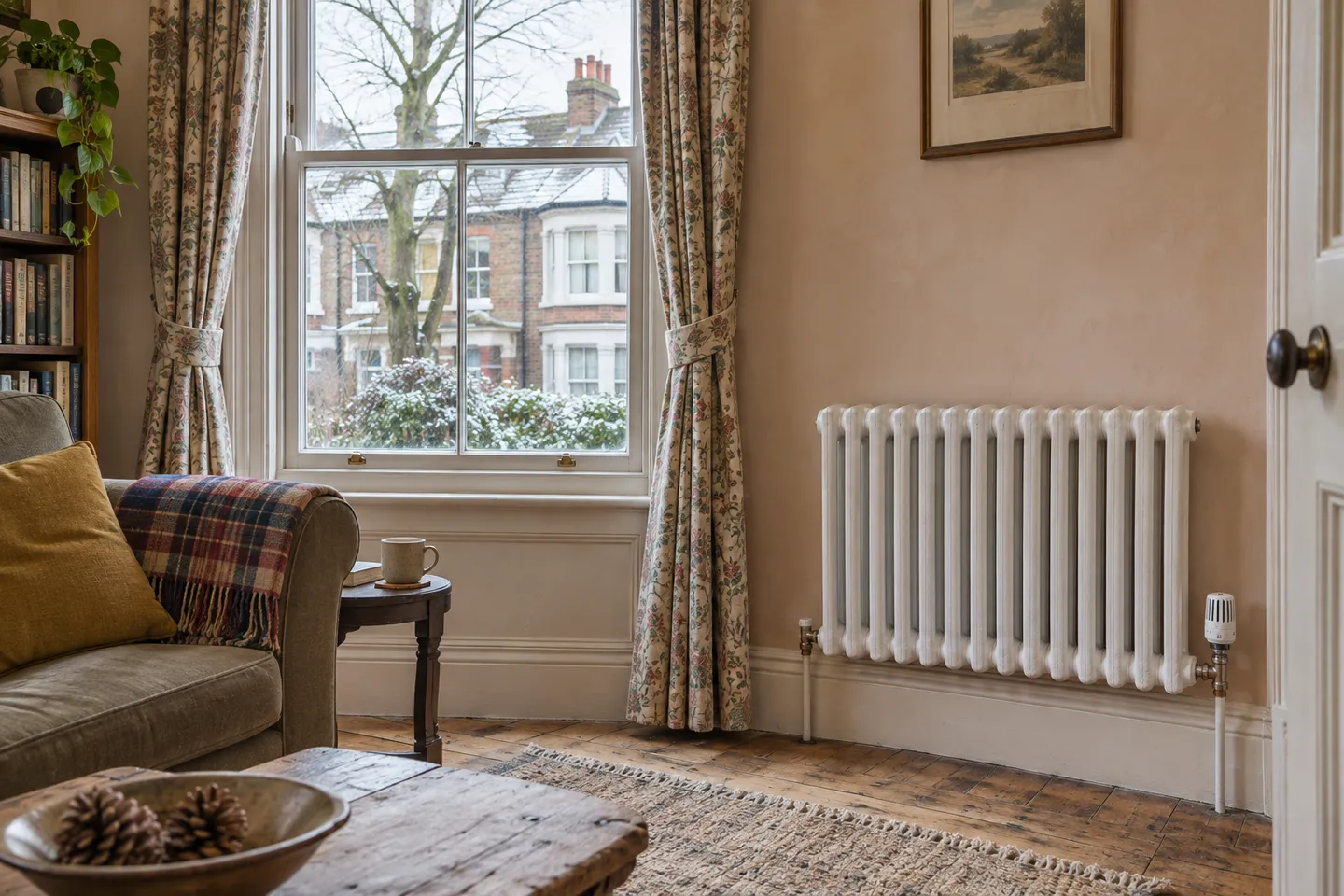
“The house is cold” can describe several different problems. A room might be comfortable in the morning but cold by evening. Another might never warm up, while the hallway feels too hot. Write down which rooms are uncomfortable, the time of day and what the heating was doing. Include obvious details such as a draught beside a chair or furniture covering a radiator.
Take this record alongside your bills. A high bill with poor comfort calls for a different investigation from a comfortable home with a newly increased tariff. The bill-reading guide helps you establish that distinction without guessing.
Know what each control does
In a typical boiler-and-radiator system, the programmer schedules heating, the room thermostat responds to temperature where it is installed, and thermostatic radiator valves help control individual rooms. Turning the room thermostat higher is not a shortcut to warming the house faster. Find the instructions for your specific controls before changing a setting you do not recognise.
Heat pumps, storage heaters and other electric systems can need different operating patterns. Do not apply a boiler schedule automatically to a heat pump. Follow the manufacturer’s guidance and ask the installer to explain the intended settings. Energy Saving Trust’s guide to heating controls describes these differences.
Make a useful heating log
For a week, record the times your main rooms are occupied, the heating schedule and whether each room feels comfortable. Where you have a room thermometer, take readings in a consistent position away from a radiator or direct sunlight. Keep comfort notes alongside the numbers: a single temperature reading will not explain every draught or cold surface.
Then choose one adjustment to assess, such as correcting an unnecessarily early start time. Record the change and compare a reasonably similar period. Avoid changing the schedule, thermostat, tariff and room use together if your aim is to understand which change made a difference. Never use a cost experiment as a reason to leave someone inadequately warm.
Put supplementary electric heating into pounds
A portable heater can make the occupied room more comfortable, but its effect on the whole bill depends on what other heating it replaces. Consider this arithmetic example: a 2 kW heater drawing full power for three hours consumes 6 kWh. At an illustrative electricity rate of 25p per kWh, that costs £1.50. Repeating exactly that use for 20 days costs £30.
Actual use changes when a thermostat cycles the heater off. The example excludes the standing charge because it considers extra use on an existing supply. It does not prove that a portable heater is cheaper than central heating: that comparison needs the amount of central heating avoided, the fuel price and system performance. Use the tariff shown on your bill rather than treating the example rate as your own.
Address the building and the system together
Historic England explains that traditional buildings need to be considered as a whole: fabric, moisture, heating and ventilation interact. Repairs and an understanding of the building should come before assuming a particular insulation measure is suitable. The right approach for one solid-wall house may not suit another with different exposure, finishes or alterations.
If one room remains cold despite sensible settings, describe that specific symptom to a qualified heating professional. If there is damp, get the cause investigated rather than simply covering it. For planned changes to a historic or listed building, seek advice appropriate to the property before work begins.
A useful brief for an adviser includes your annual fuel consumption, room notes, control model, existing heating system and known building problems. Ask what assumptions sit behind any predicted savings, what work is included and how performance will be checked afterwards. You will be in a better position to compare proposals than with a request to “make the house efficient”.
Sources & further reading
Checked 16 November 2026. General guidance for UK households; building advice and permissions vary by property and location.