 Energy Heritage
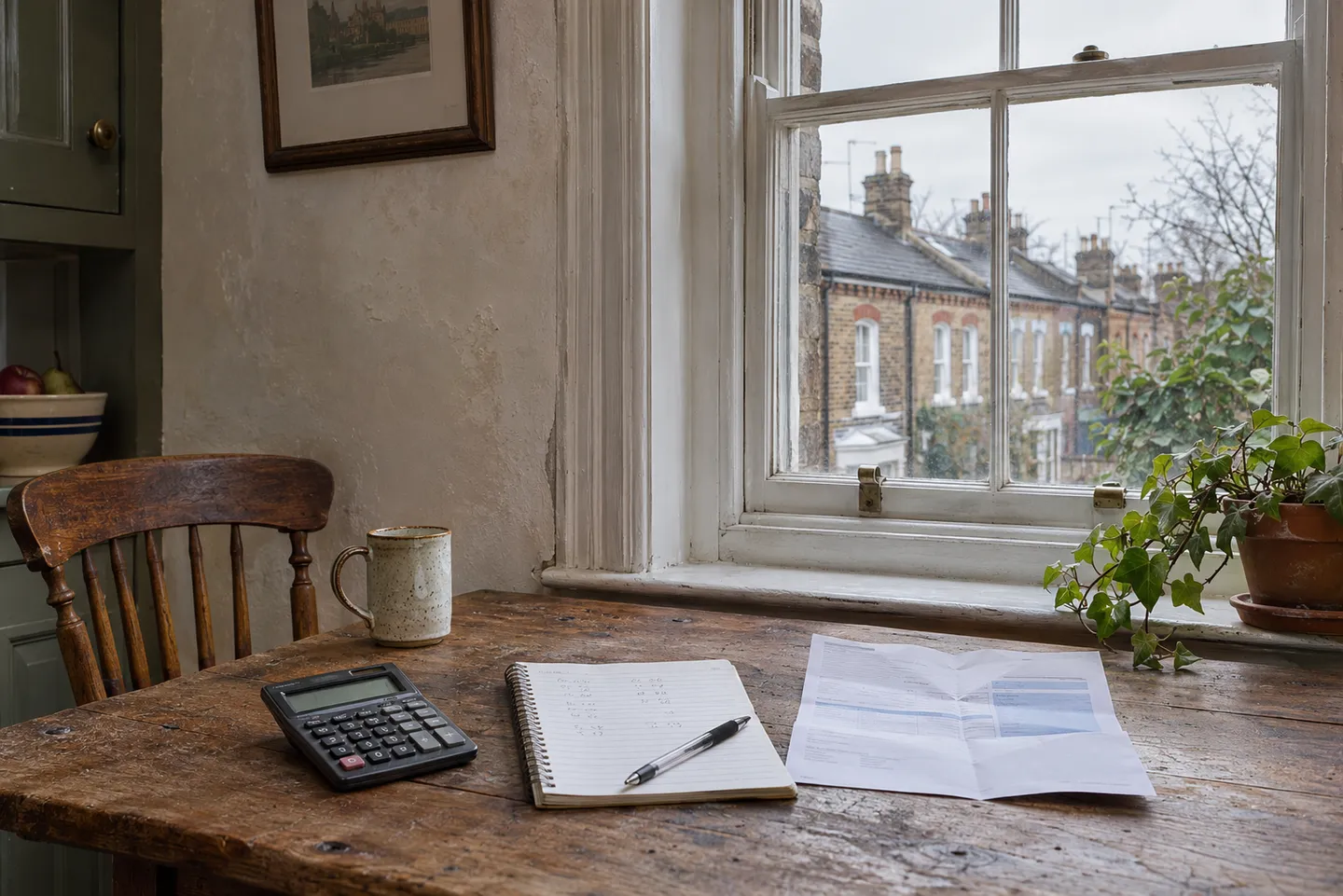
Start with the billing period
Put your latest bill beside the previous one and check the start and end dates. A bill covering 35 days is not directly comparable with one covering 28. Look for the opening and closing meter readings, whether they are actual or estimated, and any account adjustments. If an estimate has been replaced by an actual reading, the resulting charge can include energy used before the most recent month.
Write down the billing dates, electricity kWh, gas kWh and charges separately. Keep the account balance and payments in a different column. This makes it easier to distinguish the cost of energy consumed from money paid towards the account.
Read the units before the pounds
A kilowatt-hour, written kWh, measures energy. For a simple electricity example, an appliance drawing 1 kW continuously for two hours uses 2 kWh. A thermostat-controlled appliance may switch on and off, so its rated power is not necessarily its average consumption.
An electricity meter commonly records kWh. A gas meter measures a volume, usually cubic metres or cubic feet; your supplier converts that volume into kWh for billing. Do not multiply the difference between gas meter readings directly by a pence-per-kWh tariff. Use the bill’s conversion details or a tool that asks for the correct meter type.
A worked electricity bill example
The following figures are illustrative, not a current tariff quotation. Suppose a 30-day bill records 240 kWh, a unit rate of 25p per kWh and a daily standing charge of 50p. Assume both rates already include VAT.
Energy: 240 × £0.25 = £60
Standing charge: 30 × £0.50 = £15
Total for that period: £75
If consumption falls to 200 kWh at those same rates, the total becomes £65. The standing charge stays at £15. This is why a percentage reduction in consumption does not produce the same percentage reduction in the whole bill. Avoid adding VAT again when the rates you use already include it.
Compare like with like
Divide consumption by the number of days to get a daily average. In the example above, 240 kWh over 30 days is 8 kWh a day. That gives you a starting point for comparing billing periods of different lengths, but it does not remove the effect of colder weather, extra occupants or time spent at home.
For a home with gas central heating, compare winter gas use with another winter period rather than with July. Note changes such as a new work-from-home routine, an electric heater in a study or longer hot-water use. A weekly notebook entry with readings, dates and a short weather note is often more useful than trying to explain a full year from memory.
Decide what to investigate next
If kWh are broadly unchanged but the charge is higher, inspect the tariff and standing charge. If kWh have risen, look at heating hours, hot water and appliances before assuming the walls need expensive work. If the readings or dates do not make sense, ask the supplier to explain them before treating the bill as a reliable baseline.
House age alone cannot explain a bill. A small mid-terrace and an exposed detached house can have very different heat demand even when built in the same decade. Once the bill is clear, use our heating guide to connect consumption with the way you use each room.
Sources & further reading
Checked 16 November 2026. General guidance for UK households; building advice and permissions vary by property and location.